Chapter 10 Effects
This chapter describes the practical payoff of deploying and running the City Digital Twin (CDT) platform. It lays out the main ways the system affects the economy, the social sphere, governance processes, and political stability. The platform does far more than run calculations and produce reports — it improves the return on investment, makes resource allocation fairer, speeds up decisions, and builds trust in how authorities act. This chapter treats the CDT not just as a software product but as a tool for shaping a new management culture.
10.1 Economic effects
Deploying the City Digital Twin (CDT) platform delivers clear economic gains for regions, municipalities, and agencies by making planning more accurate, optimizing spending, and heading off poor decisions.
The platform drives economic value in several key ways:
- Optimizes budget spending — by giving programs a stronger basis and catching excess costs early;
- Improves the return on investment — by prioritizing projects with the highest multiplier effect and the most staying power;
- Cuts the cost of analytics and reporting — by automating calculations and report generation and eliminating manual data aggregation and duplicate work;
- Prevents losses — by flagging risks of missing targets, inefficient resource allocation, and breakdowns in logistics or infrastructure;
- Stimulates economic growth — through digital support for business, infrastructure analysis, and well-grounded investment placement;
- Lowers administration costs — by unifying approaches, automating processes, and centralizing calculations on the platform.
The effects compound over time: they start with quick wins in calculations and reporting and grow into strategic gains tied to a more effective model of territorial development overall.
Economic effects can include both direct gains (budget savings, return on investment) and indirect ones (greater trust, lighter administrative load, more accurate management decisions), and you can formalize them as KPIs, program passports, or memos.
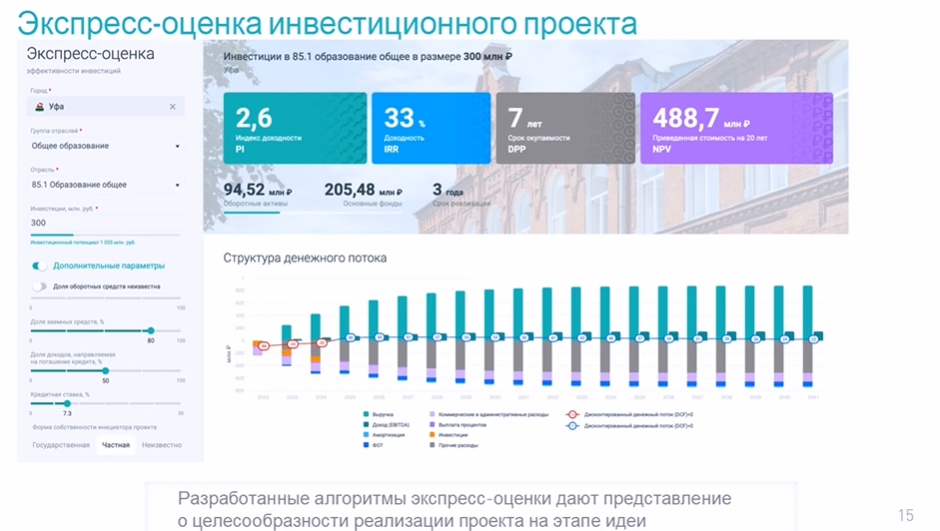
Figure 11 — Quick assessment of an investment project in GeoVEB: profitability index, IRR, NPV, and cash-flow structure
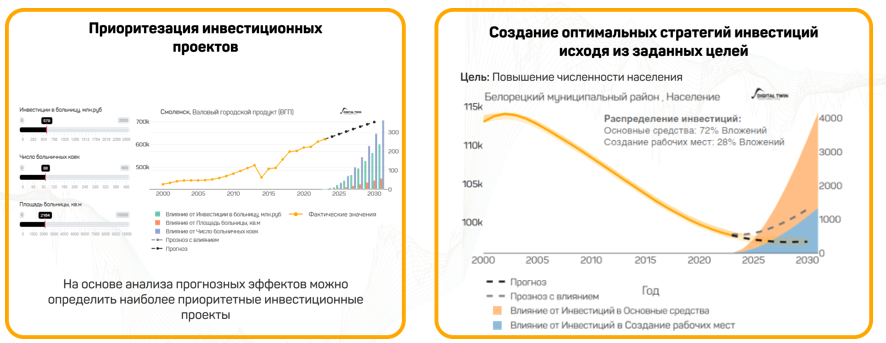
Figure 16 — Prioritizing investment projects and building optimal investment strategies based on projected effects
10.3 Management effects
Deploying the City Digital Twin (CDT) platform radically reshapes how decisions get made, bringing consistency, predictability, and provability to actions at every level of government. The platform does more than automate analytics — it builds a single digital space for management.
The key management effects include:
- Transparent, reproducible decisions — all the calculation logic, assumptions, and sources become documented and accessible, ruling out manual interference;
- Faster decision prep — by automating scenario analysis, report generation, and effect visualization;
- Better alignment across levels of government — a single database, shared indicators, and scenario templates for regions, municipalities, and agencies;
- Lower management risk — by modeling outcomes and analyzing sensitivity before a program goes live;
- Support for feedback and course correction — built-in tracking of execution and deviations from targets lets you respond quickly;
- Relief for staff — less routine work in preparing data, reports, and calculations;
- Stronger accountability — you can trace who made each decision, when, and on what data.
The CDT makes governance not only more technological but also more institutionally mature: every decision rests on calculations, scenarios, and visually backed data, and the system remembers the context. That matters most during audits, leadership changes, and long-running projects.
10.4 Political effects
The City Digital Twin (CDT) platform strengthens political stability and governability at the regional, municipal, or agency level by making the actions of authorities transparent, results accountable, and strategic decisions well-grounded. It becomes not just a technology tool but a key element in building trust, public accountability, and dialogue with society.
The main political effects include:
- Greater public trust — through clear decision-making logic, transparent calculations, and published rationales for programs and investments;
- Durable political decisions — every action can be reproduced and defended on the basis of data and scenarios, which matters most under outside scrutiny, during elections, and amid public pressure;
- Justification for spending and initiatives — digital decision passports and automated reporting reduce the risk of being accused of inefficiency and lower the friction when programs come up for debate;
- Alignment across levels of government — the digital model lets regions, municipalities, and agencies communicate in a shared vocabulary, based on shared data;
- Easier engagement with oversight and public-participation bodies — ready reporting, data verification, and scenario modeling make the CDT a convenient platform for outside review as well.
In short, deploying the CDT platform reinforces the standing of a region’s or agency’s leadership as a systematic, well-grounded, and modern management team that acts in people’s interests and on the basis of calculations.
All rights reserved Digital Twin LLC All rights reserved Digital twin LLC
10.2 Social effects
The City Digital Twin (CDT) platform has a clear social impact thanks to more accurate planning, transparent governance, and a focus on what residents actually need. By modeling programs comprehensively and tracking how they get carried out, the CDT helps raise quality of life and distribute resources fairly.
The main social effects include:
The CDT makes managing social development not only more effective but also fairer, clearer, and better protected against arbitrary or inconsistent decisions. That strengthens trust in the authorities and makes the measures they take feel better justified.