Chapter 1 Annotation
This chapter gives an overview of the City Digital Twin (CDT) platform. It covers the goals behind its development and its practical applications at every level — from federal authorities to end users. The case for building the platform rests on the regulatory and legal framework of the Russian Federation, as well as national programs and digital transformation strategies. The chapter briefly describes the architecture and functionality of the CDT, including the main ways the platform supports territorial governance, planning, monitoring, and analytics. It also classifies the key user groups who need access to the platform to carry out their responsibilities.
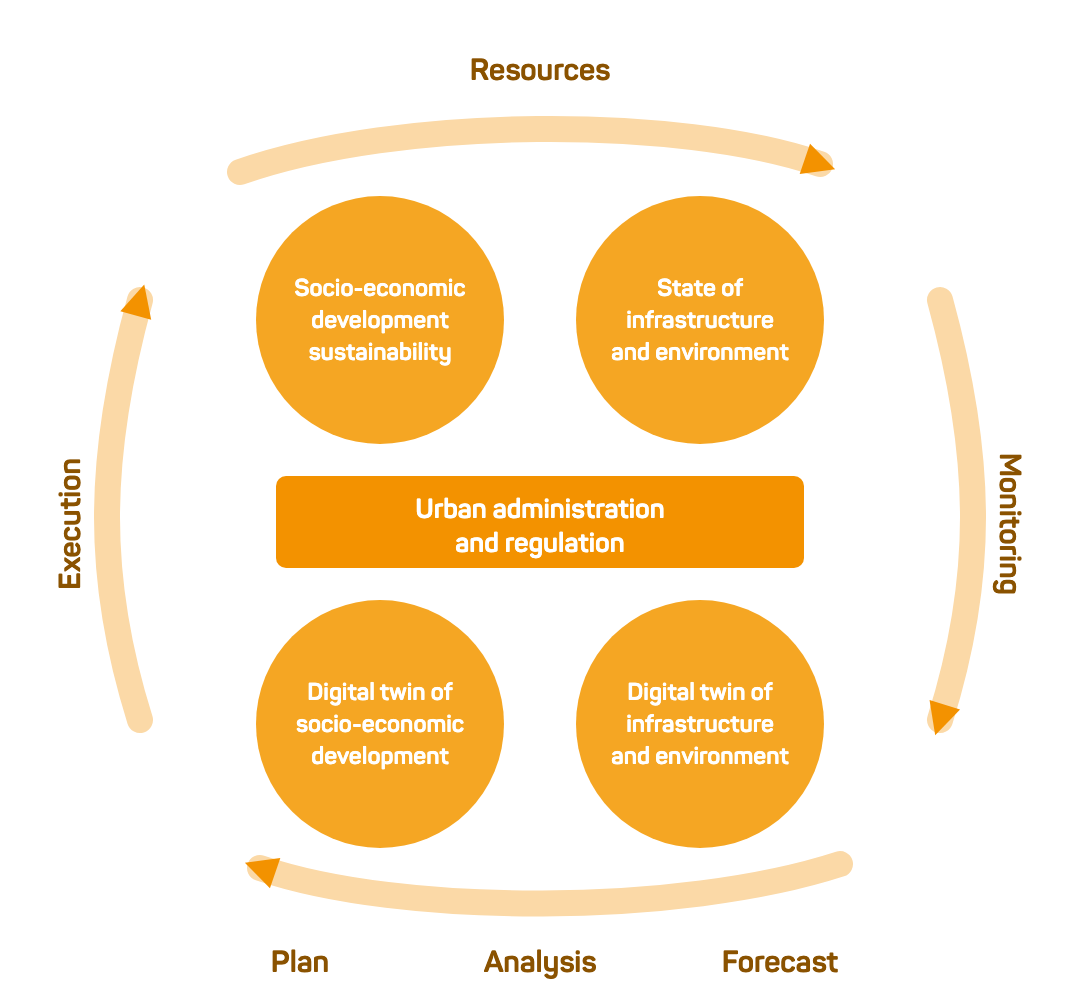
Figure 1 — The digital city management concept: a territorial management cycle powered by digital twins
1.1 Purpose and scope
The City Digital Twin (CDT) platform is built to support the digital transformation of how socio-economic development is managed across territories of the Russian Federation.
The CDT takes a holistic approach to the informational, analytical, and model-based support of management decisions, generating and analyzing scenarios, forecasts, goals, indicators, and effects automatically.
The system is used to:
- develop, maintain, and monitor government programs, national projects, and territorial master plans;
- assess and model the consequences of investment, infrastructure, and regulatory decisions;
- justify how resources (financial, infrastructure, energy, and others) are allocated across territories;
- track progress toward the targets set by Russian Presidential decrees, the socio-economic development strategy, and other strategic documents;
- build regional and municipal digital twins as the foundation for territorial governance.
The platform can be used at the federal level (the Ministry of Economic Development, the Ministry of Construction, the Ministry of Finance, and the Ministry of Energy), at the level of federal subjects (regions) and municipalities, and to coordinate work across these levels of governance.
The platform is especially valuable for analysis and management in the fuel and energy complex (FEC), a core, system-shaping sector of the economy.
The CDT builds digital fuel and energy balances (FEBs) at the regional and municipal levels, integrates with sector and industrial data sources, models development scenarios, and analyzes the sensitivity and consequences of energy decisions. The platform can serve as the core for a digital model of the FEC and a Cyber FEC, including automated data validation, carbon-footprint monitoring, tariff-policy modeling, risk localization, and long-term energy security planning.
1.2 Rationale for development
The development and deployment of the City Digital Twin (CDT) platform rest on a set of strategic, legal, and regulatory foundations established in official documents of the Russian Federation that aim to ensure sustainable territorial development, the digital transformation of governance, and the achievement of national goals.
1. National development goals of the Russian Federation
The key reference point for the CDT’s requirements is the set of national goals established by Russian Presidential Decree No. 474 of July 21, 2020, “On the National Development Goals of the Russian Federation through 2030.” They include:
- preserving the population and protecting people’s health and well-being;
- a comfortable and safe living environment;
- sustained growth in citizens’ incomes;
- digital transformation of public administration;
- sustainable territorial development.
The CDT provides digital monitoring and modeling of indicators that track progress toward all of these goals, including the quality of the urban environment, access to infrastructure, energy consumption, investment activity, and social effects.
2. The “Digital Economy of the Russian Federation” program and the digital transformation of government bodies
The CDT aligns with the national program “Digital Economy of the Russian Federation” and the Concept for the Digital Transformation of Government Bodies, approved by Russian Government Order No. 3348-r of December 12, 2020.
- The platform serves as a digital control layer for territorial management, able to connect external and internal data sources;
- It provides transparent reporting and defensible decision-making;
- It serves as the basis for automated analysis and predictive analytics.
3. The “Economic Development and Innovative Economy” government program
The CDT supports the activities laid out in the government program “Economic Development and Innovative Economy.” In particular:
- developing spatial-planning institutions;
- assessing how effectively national projects are carried out;
- modeling macroeconomic and regional effects.
The CDT automates the assessment of regional development programs, builds resource-supply balances, and creates an evidence base for interagency planning.
4. The Russian Urban Planning Code and territorial planning rules
The CDT also meets the requirements of the Russian Urban Planning Code, in particular:
- The platform can be used to develop and monitor general plans, territorial planning schemes, master plans, and integrated territorial development (ITD) programs;
- It supports modeling of project implementation scenarios and their financial, economic, social, and environmental effectiveness.
5. Developing digital FEC models and the regulatory basis for building FEBs
Expanding the CDT’s functionality for the fuel and energy complex (FEC) is justified both by the sector’s strategic importance and by the legally established requirement to build actual and forecast fuel and energy balances (FEBs) at the level of federal subjects and municipalities.
The digital FEC model implemented within the CDT is designed to:
- integrate with statistical and agency reporting sources;
- automatically build single-product and consolidated balances;
- compute forecast FEBs in a streaming fashion based on scenario conditions and intersectoral balance (IB) models;
- prepare analytical and forecast materials for regional development strategies and gasification, power-supply, and heat-supply schemes.
The CDT accounts for the requirements of the following regulatory and methodological documents:
- Order No. 1169 of the Russian Ministry of Energy of October 29, 2021, “On Approving the Procedure for Compiling Fuel and Energy Balances of Federal Subjects and Municipalities”;
- The official statistical methodology for compiling the FEB of the Russian Federation, approved by Rosstat Order No. 229 of April 4, 2014;
- The methodological provisions for calculating the FEB, approved by Goskomstat Resolution No. 46 of June 29, 1999;
- The Energy Strategy of the Russian Federation through 2035 (Russian Government Order No. 1523-r of June 9, 2020);
- The “Energy Development” program, approved by Russian Government Resolution No. 321 of April 15, 2014;
- FEC development strategies and programs of federal subjects, heat-supply schemes, and territorial planning documents.
The platform’s functionality meets the requirements of the information and modeling system (IMS) of the Russian Energy Agency, used in government procurement for prototyping FEB forecasting systems.
Implementing the FEB within the CDT provides:
- automatic reconciliation and consolidation of heterogeneous statistical forms (Form No. 4-TER, No. 46-EE, No. 22-ZhKH, and others);
- compliance with detail requirements by type of fuel and energy resource and by consumer category;
- flexibility in building forecast scenarios (including inter-fuel competition and tariff scenarios);
- interaction with regional digital platforms and government systems (the State Information System for the FEC, the State Housing and Utilities Information System, the Federal Tax Service’s accounting reporting database, and Rosreestr).
The CDT is a universal decision-support platform for the energy sector that can replicate the forecast-FEB methodology, flexibly configure scenario calculations, and tie them to the socio-economic scenarios of federal subjects.
6. Methodological documents and recommendations from federal authorities
The capabilities and architecture of the CDT platform reflect the provisions of key methodological documents developed by the Russian Ministry of Economic Development, the Ministry of Finance, Rosstat, and other relevant agencies. They include:
- guidelines for assessing the effectiveness of investment projects that account for risk and the time value of money;
- methodologies for calculating regional indicators of socio-economic development and territorial sustainability;
- recommendations for adopting digital solutions at the regional and municipal levels, including in budget planning, integrated territorial development, and the monitoring of national goals.
The CDT platform was designed to fit into existing regulated processes, including the use of approved indicators, review procedures, and reporting forms. This lowers adoption barriers and ensures continuity with existing management formats.
Building and deploying the City Digital Twin platform is fully consistent with the current objectives and strategic priorities of Russian government policy.
The platform meets the requirements of the legal and regulatory acts, concepts, and methodologies approved at the federal level, and it can serve as a universal tool for the digital transformation of territorial governance.
Using it makes it possible to:
- improve the soundness and transparency of decisions;
- monitor the execution of strategic documents and national projects;
- reduce the risk of subjective and ineffective decisions;
- support digital transformation programs at every level of government.
1.3 Brief description of the platform
The City Digital Twin (CDT) platform is a scalable digital system for collecting, aggregating, analyzing, and modeling data on the socio-economic, infrastructure, and environmental development of cities and regions of the Russian Federation. The platform spans every level of governance: from federal authorities to municipalities, enterprises, and individual users.
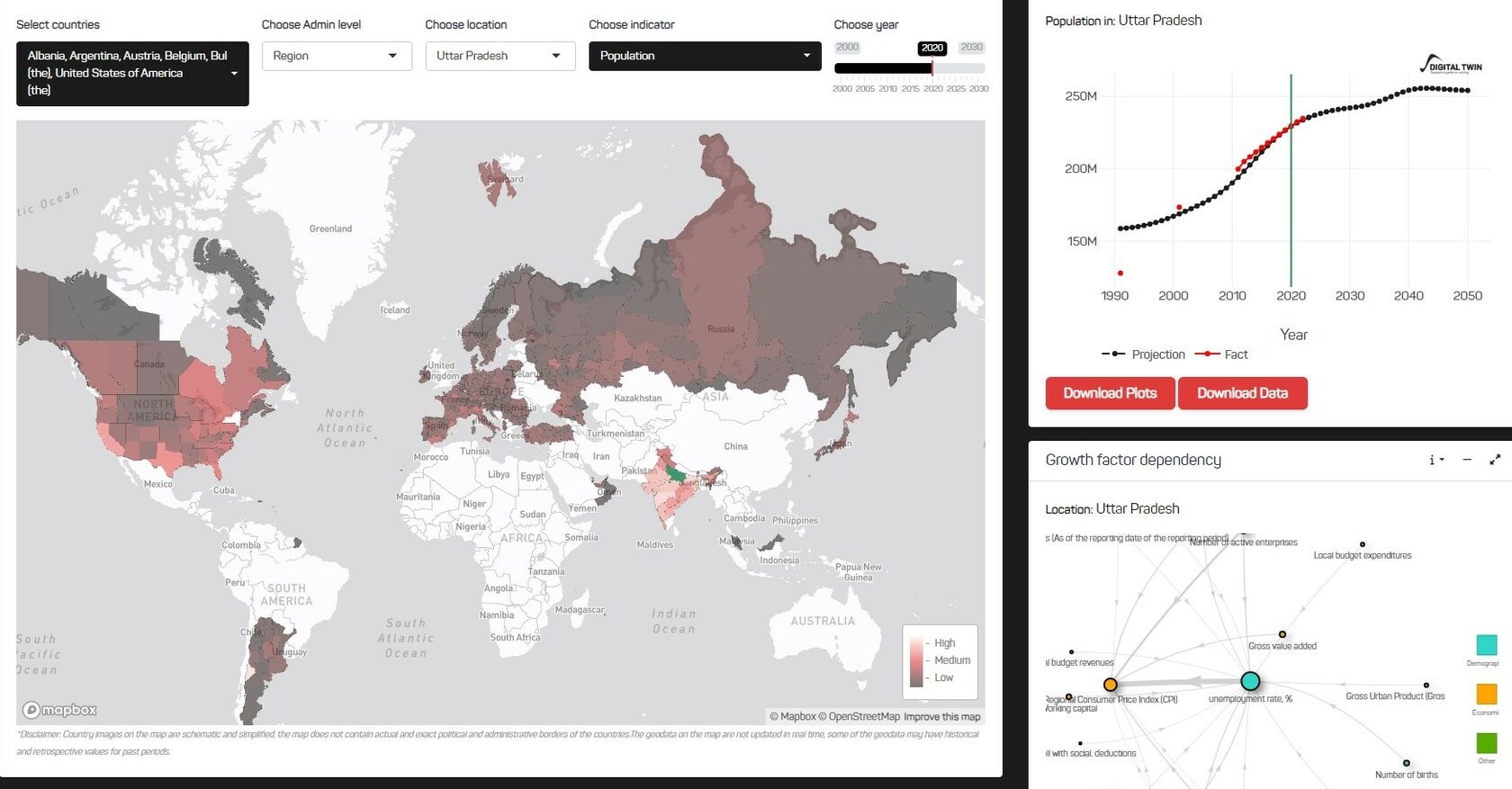
Figure 2 — Overview of the CDT platform: an interactive dashboard with a territorial map and key indicators
1.3.1 Core platform functions
1. Territorial analytics and monitoring
- Automated processing of data from dozens of sources (Rosstat, the Federal Tax Service, the Ministry of Finance, the Unified Interdepartmental Statistical Information System, the cadastre, transport, environmental, and energy-metering data);
- Calculation of more than 2,000 indicators for each municipality;
- Monitoring of trends in key indicators (income levels, demographics, investment, employment, environmental load).
2. Mathematical modeling
- Scenario modeling of territorial development;
- Reverse modeling from a target value (what-if);
- Models of sustainability, clustering, spatial distribution, system dynamics, and PCA;
- Calculation of fuel and energy balances, investment needs, and infrastructure capacity.
3. Goal-based and program management
- Monitoring the execution of federal, regional, and municipal programs;
- Automatic generation of goal and subgoal records;
- Calculation of how achievable goals are and of critical deviations;
- Justification of target indicators in national projects and government programs.
4. Infrastructure planning
- Integration with data from general plans, territorial planning schemes, and land-use and development rules;
- Support for master plans and integrated territorial development (ITD) programs;
- Assessment of the effectiveness of infrastructure projects and machine-readable powers of attorney;
- Optimization of where to place social, utility, and transport infrastructure.
5. Budget and investment planning
- Assessment of the budget capacity and tax potential of territories;
- Calculation of subsidy needs;
- Preparation of well-justified funding requests;
- Integration with project-management and investment-planning platforms.
6. Management decision-making
- Justification and simulation of decisions: where to invest, what to optimize, where the risk lies;
- Support for data-driven collective decision-making;
- Built-in metrics of social fairness and spatial equity;
- Building an evidence base for reports and justifications.
7. Interfaces and access levels
- A web interface for specialists and analysts;
- A REST API and integration with external systems (BI, ERP, 1C, GIS);
- A Telegram bot for quick information requests.
Access levels: from ministers and governors to agency staff and citizens.
1.3.2 Practical use at different levels
1. Federal level
- Support for the Ministry of Economic Development, the Ministry of Construction, the Ministry of Finance, the Ministry of Energy, and others in carrying out national projects;
- Coordination of the country’s territorial development;
- Justification of budget planning and the distribution of intergovernmental transfers;
- FEB calculations and strategic planning;
- Analysis of regional disparities and socio-economic risks.
2. Regional and municipal level
- Support for developing and overseeing the execution of regional government programs;
- Optimization of budget allocation across municipalities;
- Ensuring territorial energy efficiency and modeling the consequences of FEC decisions;
- Development of spatial development strategies;
- Work with master plans for cities and agglomerations.
3. Enterprise level
- Analysis of access to resources and infrastructure;
- Assessment of a territory’s potential for siting production facilities;
- Calculation of the investment appeal of sites;
- Support for corporate ESG monitoring and reporting.
4. End-user level
- Access to public dashboards and visualizations by city;
- Comparison of the quality of the environment and the level of development across territories;
- Assessment of one’s own neighborhood across many parameters;
- Support for citizen participation in decision-making (through participatory budgeting and ITD).
1.3.3 Integration
The CDT platform integrates with:
- Official agency and sector systems (the State Housing and Utilities Information System, the State Energy Information System, Rosreestr, the Federal Tax Service);
- Regional and municipal regional management centers;
- Project-management systems and BI platforms (Power BI, Qlik, Tableau, Yandex DataLens, and others);
- Agency digital twins of enterprises and infrastructure.
1.4 User groups
The City Digital Twin (CDT) platform serves a wide range of users across all levels of government, management, business, and society. Each of these groups needs access to the platform to fulfill its responsibilities, ground its decisions in data, and improve the effectiveness of its work.
1. Federal executive authorities
Users:
- The Russian Ministry of Economic Development;
- The Russian Ministry of Construction;
- The Russian Ministry of Finance;
- The Russian Ministry of Energy;
- The Russian Ministry of Digital Development.
Why they need the CDT:
- Developing, carrying out, and monitoring national projects;
- Allocating federal funds and subsidies based on objective indicators;
- Forecasting the socio-economic development of regions;
- Consolidating and forecasting the FEB of the Russian Federation;
- Assessing regional risks and imbalances.
2. Regional executive authorities
Users:
- Regional ministries of economy, construction, housing and utilities, transport, and the environment;
- Committees for territorial planning, finance, and investment.
Why they need the CDT:
- Developing and carrying out regional government programs;
- Optimizing inter-municipal resource allocation;
- Consolidating and forecasting the regional FEB;
- Preparing master plans, development strategies, and integrated ITD schemes;
- Aligning with federal programs and national projects.
3. Municipal authorities
Users:
- City and district administrations;
- Departments of municipal services, urban planning, and public amenities;
- Municipal regional management centers and analytical centers.
Why they need the CDT:
- Making decisions about urban-environment development;
- Assessing the need for schools, kindergartens, and medical facilities;
- Preparing budget funding requests;
- Preparing and overseeing public-amenities and ITD programs.
4. State-owned and private enterprises
Users:
- Infrastructure operators (heat, power, water, telecom);
- Developers and design organizations;
- Banks and development institutions;
- Strategic sector enterprises.
Why they need the CDT:
- Assessing the investment appeal of territories;
- Planning the development of network infrastructure;
- Calculating load, needs, P&L, and payback periods for projects;
- Reducing the risk of choosing the wrong sites and scenarios.
5. Analysts, experts, and research organizations
Users:
- Regional and federal regional management centers;
- Research institutions and universities;
- Independent consulting and IT companies;
- Staff of agency analytical units.
Why they need the CDT:
- Preparing forecasts, scenarios, and analytical briefs;
- Visualizing data and producing reports;
- Testing hypotheses and identifying patterns;
- Building models based on real data.
6. The public, the media, and nonprofit organizations
Users:
- Local residents;
- Representatives of the Russian Popular Front, NGOs, and civic initiatives;
- Journalists, urbanists, and bloggers.
Why they need the CDT:
- Public oversight of progress toward national goals and development indicators;
- Access to interactive maps, rankings, and comparisons;
- Participation in decision-making at the city and district levels;
- Greater digital transparency and trust in government.
Each of these groups — from the strategic planner to the everyday resident — gains in the CDT platform a tool for objective assessment, decision support, and oversight of development.
All rights reserved Digital Twin LLC All rights reserved Digital twin LLC